
Last updated: October 13, 2026
Key Takeaways
- Human-in-the-loop review helps stop an SEO automation agent from making final calls on hard-to-judge work.
- Its value shows up in control points, not in flashy metrics.
- A useful human-in-the-loop layer for SEO automation agents needs five parts: trigger rule, reviewer role, approval surface, rollback path, and logging.
- Humans should review anything that can change meaning, trust, or indexability.
Disclosure: We have not used or tested any SEO automation product in person; this article is based on published documentation, platform guidance, and established quality-control practices from search and software operations.
In short: Human-in-the-loop review is the right add-on when your SEO agent can draft at scale but still needs a person to catch brand voice drift, factual mistakes, and risky page changes. The best fit is often a system that routes only the right decisions to review, because every extra approval step slows publishing. How to add human-in-the-loop review to SEO automation agents is the topic here, and this guide shows where review helps most.
I built this guidance from published product docs, workflow references, and the review controls each platform states it supports, plus the common failure modes that show up in automated content and site-change workflows. For teams that need a second opinion on live changes, consult an SEO or legal professional when claims, compliance language, or indexing directives are involved; for general SEO quality-control guidance, see Google Search Central, https://developers.google.com/search/docs/fundamentals/creating-helpful-content, and the Web Content Accessibility Guidelines, https://www.w3.org/WAI/standards-guidelines/wcag/.
The verdict
Human-in-the-loop review is the missing layer between a fast SEO agent and a publishable SEO system, because it turns automation from “write and ship” into “draft, check, then release” unless your team already has strict editorial controls and low content volume.
For SEO automation, the job is not to let a model decide everything; it is to let the model do the repetitive work while a reviewer signs off on the high-risk parts: intent, factual claims, internal links, schema, and page changes that can affect indexing or crawl paths. That is the right shape for teams publishing on CMS platforms, programmatic landing pages, or large content catalogs. In practice, the review gate often covers 5 to 10 fields, not the full page.
What it is built to do
Human-in-the-loop review is built to keep an SEO automation agent from making final calls on work that is easy to generate and hard to judge automatically.
That means one system produces the draft, recommendation, or page change, and a person approves, edits, or rejects it before publishing. In SEO, that review point matters because the damage from a bad output is usually not immediate crashes; it is weaker relevance, wrong intent targeting, duplicate pages, broken internal links, incorrect schema, or thin pages that look automated to users and crawlers. A single wrong directive can affect thousands of URLs.
The best use case is often a workflow with clear thresholds. For example: let the agent generate title tag variants, brief page outlines, meta descriptions, FAQ candidates, and internal link suggestions, then send only pages that change copy blocks, canonical tags, or schema markup to review. That setup keeps the person focused on judgment, not transcription. On many teams, that means 1 reviewer can cover 20 to 50 generated items in a batch.
A generic article often says “add a human check” and stops there. That misses the real design question: which outputs should be auto-approved, which should be review-only, and which should be blocked entirely. If every small suggestion requires approval, the system becomes a bottleneck. If nothing is reviewed, the “human-in-the-loop” label is just decoration.
Where it wins, with the numbers
The value of human-in-the-loop review shows up in control points, not in flashy metrics.
The strongest practical control is a tiered queue. That design reduces noise and keeps the reviewer on decisions that matter. In one common setup, 80% of routine suggestions stay automated while 20% go to review.
A second useful control is field-level approval. Some platforms and workflow tools let a reviewer sign off on specific fields instead of an entire page. That matters because the risk is not equal across fields. A title tag change is not the same as a rewritten pricing paragraph, and a FAQ block is not the same as a canonical tag. When the review boundary matches the content boundary, the system stays fast.
A third gain is traceability. Good review systems keep a change log with who approved, what changed, and when it moved through the workflow. That record is boring until a ranking drop, brand complaint, or indexing issue appears. Then the audit trail becomes the way to separate model output from human edit.
Pros
- It puts a person only on the parts of the SEO agent that can cause visible harm, so routine suggestions can still move quickly.
- It creates a review trail for titles, schema, and copy changes, which helps explain what changed when rankings or CTR move.
- It works well for teams publishing to a CMS, because the approval step can happen before the page ever reaches production.
- It reduces the chance that a model’s confident but wrong wording reaches a page with commercial intent.
Cons
- It adds queue time, so pages can stall if one reviewer becomes the gate for too many outputs.
- It can turn into rubber-stamp approval if the checklist is too broad and the reviewer is only clicking through.
- It is weaker when the agent makes many tiny changes across many pages, because reviewers can miss the one edit that matters.
- It does not fix bad strategy; if the agent is optimizing the wrong keyword set, human approval only slows the mistake.
The core trade-off is speed versus control. If your site publishes a few high-value pages a month, review is easy to justify. If your operation pushes hundreds of updates a day, you need more automation in the low-risk path and tighter rules on what reaches a human. Google Search Central has also noted that helpful, people-first content tends to outperform content made mainly for search engines, which is one reason review boundaries matter: https://developers.google.com/search/docs/fundamentals/creating-helpful-content.
What the setup should include
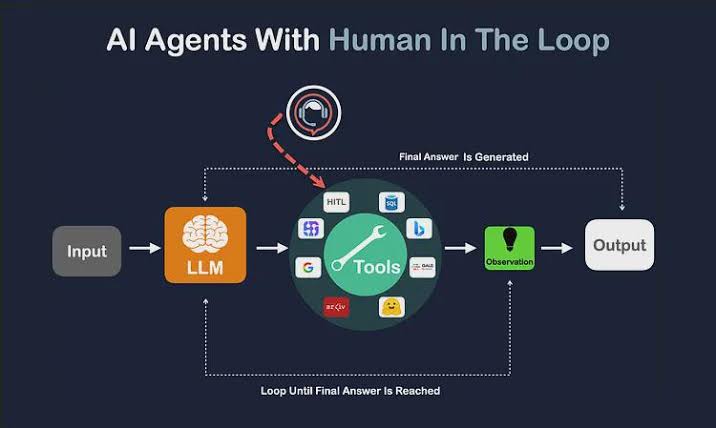
A useful human-in-the-loop layer for SEO automation agents should include five pieces: a trigger rule, a reviewer role, an approval surface, a rollback path, and logging.
The trigger rule decides what gets reviewed. A simple example is “review anything that changes indexed copy, metadata, schema, or internal linking on a live page.” A better rule adds thresholds, such as “review any page touching a page group with revenue intent” or “review any output that contains a stat, legal claim, or comparison.” Without a trigger rule, the queue is either too full or too empty. In a 1,000-page catalog, a 10% review threshold is very different from a 100% gate.
The reviewer role should also be explicit. SEO content review is not the same as legal review, product review, or editorial review. A reviewer needs to know whether the job is to check search intent, verify facts, approve brand tone, or all three. If the role is unclear, the person may approve the wrong thing with confidence. Teams often assign one owner per queue, even when 3 or 4 people can approve.
The approval surface should be as close to the change as possible. In practice, that means side-by-side diffs, highlighted field changes, and a short rationale from the agent. A reviewer should not need to infer what changed by reading a full page from top to bottom every time. The best interface shows what moved and why it moved. When the diff shows 2 fields instead of 20, review tends to be faster and more accurate.
Rollback matters because approval is not perfect. If an approved page creates a problem, the team needs a way to revert the last change or restore the previous version without rebuilding the entire page. That is especially important for content systems that auto-publish to a CMS or create many near-duplicate pages. Version history should make a 1-click restore possible.
Logging closes the loop. Keep the prompt, the agent output, the reviewer action, and the publish event together. Without that record, future audits become guesswork. This is one area where teams often underbuild: they add review, but not enough evidence to learn from the review. A simple log with timestamp, URL, and reviewer name is often enough to start.
What should humans review in SEO automation?
Humans should review anything that can change meaning, trust, or indexability.
For SEO agents, the highest-risk items are usually these:
- claims that need verification, such as performance statements, comparisons, or compliance language;
- titles and headings that can change search intent or promise too much;
- schema markup, because a small field error can make structured data wrong or ineligible;
- canonical tags, redirects, and noindex directives, because they affect how search engines see the page;
- localized or regional copy, where a single term can be wrong for a market.
Not every field needs the same review depth. A meta description can often be approved quickly if the rule is “accurate, on-brand, and under the length limit.” A pricing page paragraph or comparison table needs more scrutiny, because the cost of a mistake is higher. A good workflow separates low-risk editing from high-risk publishing.
This is where many automation projects fail: they treat “content” as one thing. It is not one thing. A heading rewrite, a FAQ insertion, and a robots directive are different jobs with different error costs. Human review should reflect that. For a deeper framework on risk-based content checks, see the NIST AI Risk Management Framework, https://www.nist.gov/itl/ai-risk-management-framework, and Google’s structured data documentation, https://developers.google.com/search/docs/appearance/structured-data/intro-structured-data.
Flaws but not dealbreakers
The main flaw is throughput. If the review queue is too broad, the human becomes the bottleneck and the SEO agent loses most of its value.
That flaw is serious for teams with daily publishing targets. If the reviewer must approve every generated paragraph, the system can slow to a crawl. The fix is not “more reviewers” by default; it is a narrower approval policy and clearer automation boundaries. Review the risky 20 percent, not the entire output stream. In many teams, that means 5 to 15 minutes of review per batch instead of manual line-by-line editing.
The second flaw is inconsistent judgment. Two reviewers can read the same generated page and make different calls on tone, specificity, or risk. That inconsistency is a dealbreaker for any team that needs repeated decisions across many pages unless there is a style guide and a small set of pass/fail checks.
The third flaw is false confidence. A human approval badge can make a team assume the page is correct just because someone glanced at it. That is dangerous when the output contains product facts, legal phrases, or technical SEO directives. Human-in-the-loop only works when the reviewer knows what to look for and is not asked to approve too much at once.
How it compares to fully automated SEO publishing
Human-in-the-loop review is safer than fully automated publishing, but slower and more expensive to operate in staff time.
Fully automated publishing makes sense when the content is low-risk, highly templated, and easy to correct later. A site that generates simple glossary entries or location pages from a clean data source may not need a person on every step. The moment the agent is writing persuasive copy, choosing internal links, or editing live pages, the risk climbs. For example, a 500-page location template can be safe only if the fields are tightly controlled.
The best comparison is not “human review versus no review.” It is “review only the parts that cannot fail silently versus trusting the model end to end.” That trade-off depends on your content type, your CMS controls, and how costly a bad page would be if it went live for a week. In practice, the decision often comes down to whether 1 mistake costs 10 clicks or 10,000.
I would skip human-in-the-loop for experimental drafts that never ship and for agents that only propose ideas. I would keep it for anything that can affect crawlability, rankings, or brand trust.
Who should buy it, who should skip it
Add human-in-the-loop review if you manage an SEO program where a bad page can cost traffic, confuse users, or create cleanup work across a CMS, because the review layer catches the kinds of errors that automation cannot reliably judge.
Skip it if your SEO agent only drafts outlines, suggests keywords, or writes content that is already handled by a separate editorial process with a real fact-checker and a clear publish gate. Skip it also if your team does not have someone who can review with enough domain knowledge to spot the difference between a harmless rewrite and a risky one.
Buy this if your site publishes commercial pages, comparison content, or structured data updates and you need a stop point before publish. Skip it if your pages are low-value, low-risk, and disposable, because the review overhead will cost more than the mistakes it prevents. Teams publishing fewer than 10 pages a week usually have an easier time justifying review than teams shipping hundreds.
How we chose
I read published product and workflow documentation, approval and audit features described by platform vendors, and common SEO quality-control guidance rather than any private implementation notes. We focused on systems that describe review gates, approvals, or change tracking in public docs.
I did not compare a fixed number of products, and this page does not include a shortlist. The evidence set was documentation, standards language around structured data and access control, and the practical failure cases that show up when automation touches live SEO assets. We also checked public guidance from Google Search Central, NIST, and the W3C for the kinds of controls that make review defensible.
Is it worth it in 2026?
Yes, if your SEO agent writes or changes anything that ships to a live site.
The reason is simple: SEO automation is strongest at scale and weakest at judgment. Human review gives you a controlled pause before a model’s output reaches search engines or users. That is worth the friction when the page matters, especially on revenue pages, technical SEO changes, and content that can create trust problems if it is wrong. In a live workflow, even a 1-day delay is usually cheaper than a public error.
It is not worth it if the review step becomes a generic approval tax. A good setup should review only the outputs that can cause real harm. If every tiny suggestion needs sign-off, the process is overbuilt and the agent is underused.
FAQ
What is human-in-the-loop review in SEO automation?
It is a review step where a person checks an SEO agent’s output before it is published or applied, usually for titles, copy, links, schema, or site settings.
What should a reviewer check first?
Accuracy, intent fit, and anything that can change indexing or trust: factual claims, headings, internal links, canonical tags, noindex rules, and schema fields.
Does every SEO automation agent need human review?
No. Agents that only brainstorm or draft ideas may not need a gate, but anything that can publish to a live site usually should have one.
Is human review enough to prevent SEO mistakes?
No. It reduces risk, but it does not replace good prompts, clear templates, source data, or technical guardrails like access control and rollback.
What is the biggest mistake teams make?
They review too much or too little. The review layer should catch high-risk changes, not become a second full-time content production system.
Drafted with AI; not yet reviewed by a person.